-
E-mail : info@sparktechclean.com


E-mail : info@sparktechclean.com
The Efficiency Revolution: Why Floor Scrubbers Outperform Manual Cleaning
In the demanding environments of modern industry, maintenance efficiency is not just a goal—it's a critical driver of safety, productivity, and cost control. When it comes to floor care, the battle between traditional manual mopping and automated industrial floor scrubbers is decisively won by technology. Here’s a detailed comparison illustrating why floor scrubbers are fundamentally more efficient than manual labor.
Manual Cleaning: A two-person team mopping a large warehouse aisle is a slow, repetitive process. It involves sweeping, moving buckets, mopping, rinsing, waiting for floors to dry, and often re-mopping stubborn areas. This consumes hundreds of man-hours monthly.
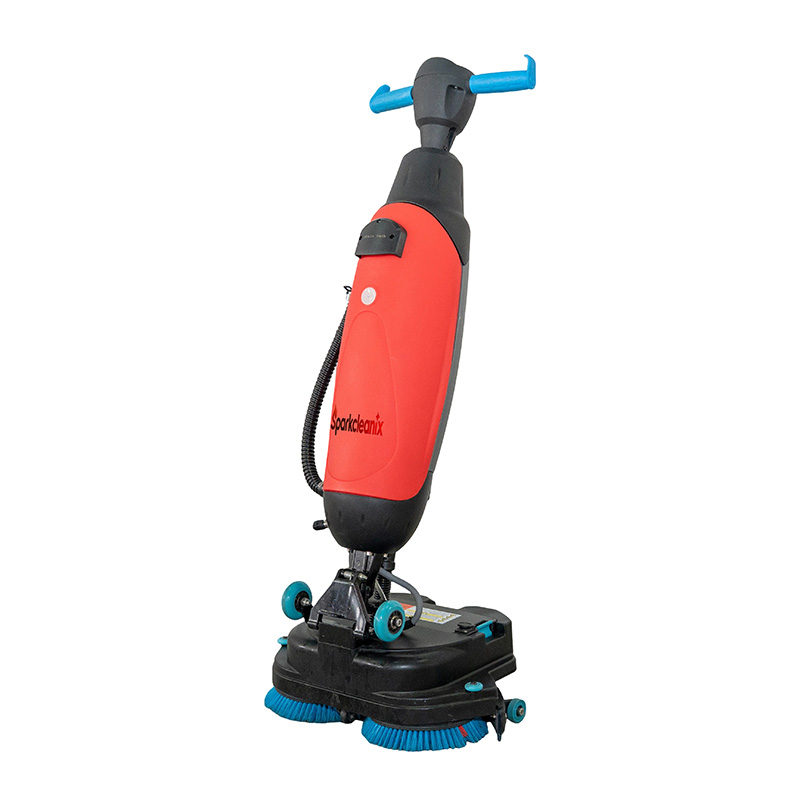
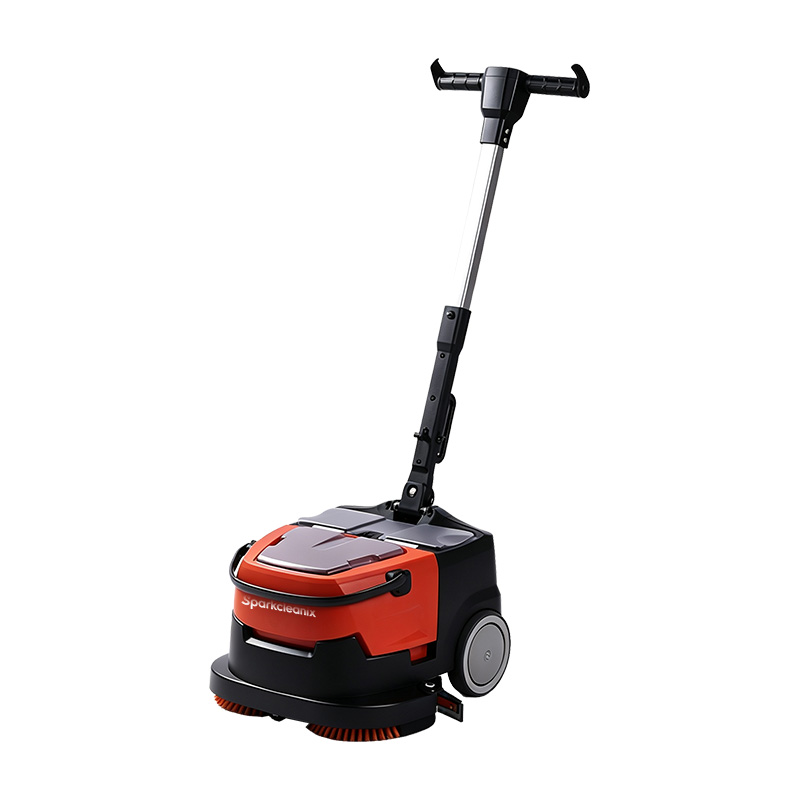
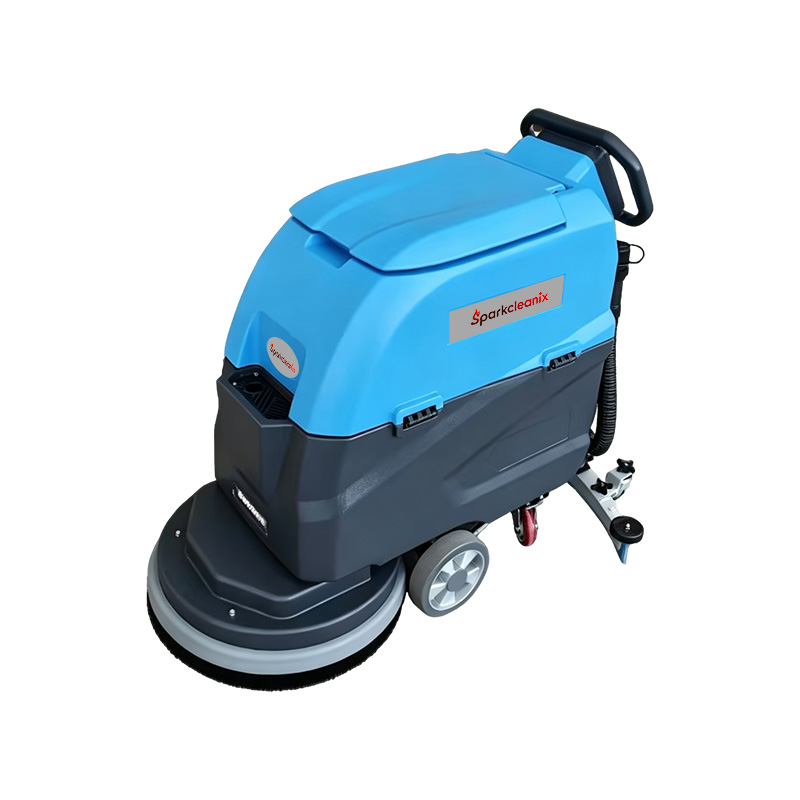
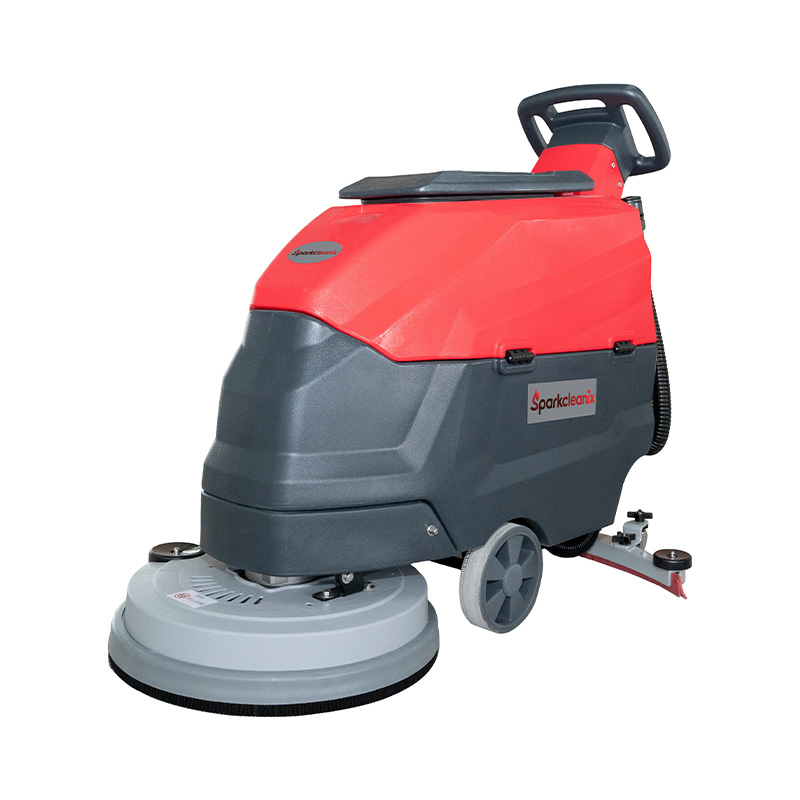
Floor Scrubber: A single operator on a ride-on or walk-behind scrubber cleans, scrubs, and dries the floor in a single pass. What takes a manual crew 4-5 hours can be accomplished by one person with a scrubber in under an hour. This frees up skilled labor for more valuable tasks, drastically reducing labor costs and cleaning downtime.
Manual Cleaning: Results are highly inconsistent, relying on individual effort and technique. Mops push dirty water around, leaving behind germs, grime, and detergent residue. Drying times are long, creating slip hazards. "Shadow marks" and streaks are common.
Floor Scrubber: Delivers laboratory-level consistency. Machines apply a precise, controlled amount of cleaning solution, agitate the floor with calibrated brush pressure, and immediately vacuum the dirty water into a sealed tank. This leaves a uniformly clean, near-dry surface instantly, eliminating slip risks and residue. The mechanical action removes ingrained dirt that mops simply cannot.
Manual Cleaning: Incredibly wasteful. Buckets require frequent changing, leading to high volumes of water and chemical use. The process is imprecise, often using too much or too little detergent.
Floor Scrubber: Engineered for precision and conservation. Closed-loop systems meter exact amounts of solution and recover up to 95% of the dirty water. This typically leads to over 70% savings in water and chemical consumption, reducing operational costs and environmental impact.
Manual Cleaning: Highly disruptive. "Wet floor" signs cordon off large areas for extended periods, disrupting workflow and traffic. The physical strain of mopping leads to higher rates of worker fatigue and injury.
Floor Scrubber: Minimizes disruption. Faster cleaning and immediate dry times mean areas return to service quickly. The operator works ergonomically, reducing physical strain. Most importantly, the consistently drier floor significantly reduces the risk of slip-and-fall accidents, a major source of liability.
Manual Cleaning: Has hidden long-term costs: higher labor turnover due to a difficult job, potential injury claims, and inefficient use of supplies. Mops and buckets can become sources of cross-contamination if not meticulously maintained.
Floor Scrubber: Represents a strategic investment. While the upfront cost is higher, the Return on Investment (ROI) is rapid and clear through labor savings, reduced water/chemical bills, and lower liability insurance premiums. The process is inherently more hygienic, as contaminated water is removed, not spread.

Tel : +86-19105657103
Email : info@sparktechclean.com